Share this
by Edge Dairy Farmer Cooperative on Oct 22, 2026, 11:13:31 AM
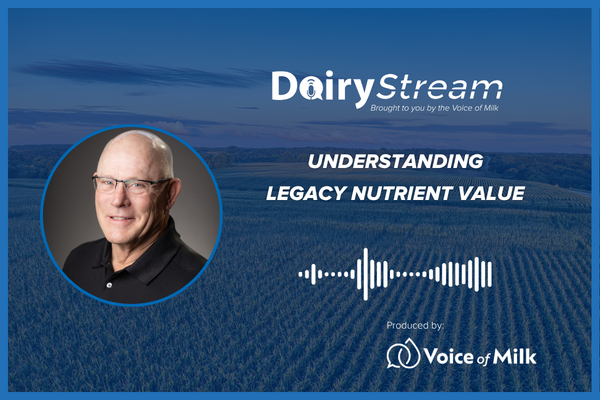
When agricultural land is purchased or inherited, most people focus on the acres, productivity, location and market value. However, there may be significant value already present beneath the soil surface. This is known as legacy nutrient value.
In a recent Dairy Stream podcast episode, host Joanna Guzza sat down with Dave Stamp, Midwest Region Referral Partner Manager at Boa Safra Ag, to discuss how landowners can identify and potentially benefit from the nutrients already built into their soil.
What is legacy nutrient value?
Legacy nutrient value refers to the value of crop-producing nutrients that exist in the soil at the time agricultural land is purchased or inherited. These nutrients include:
- Phosphorus
- Potassium
- Other macro nutrients
- Various micronutrients
These nutrients contribute to a property's productivity and can represent a significant asset associated with the land.
Through specialized soil sampling, analysis and reporting, Boa Safra Ag works to identify, quantify and document this nutrient value so landowners can review the findings with their tax and financial advisors.
How valuable can legacy nutrient value be?
According to Stamp, the financial impact can be substantial, though it varies based on several factors, including:
- The nutrient levels present at the time of purchase
- Fertilizer and nutrient prices at the time of purchase
- The landowner's tax situation and tax bracket
In many cases, net savings may range from a few hundred dollars to more than $1,000 per acre, making it worthwhile for landowners to investigate.
Who should explore legacy nutrient value?
Most owners of productive agricultural land may want to evaluate whether they qualify.
Potential candidates include:
- Farmers who own productive cropland
- Landowners who rent out agricultural land
- Individuals who recently purchased farmland
- Those who inherited agricultural property
Stamp noted that many landowners can potentially review purchases dating back to 2010, and in some situations even earlier.
What about rental ground?
Simply renting farmland does not qualify. However, ownership is the key factor. Landowners who own productive agricultural land, even if they lease it to someone else, may still qualify depending on their circumstances.
Why haven't more farmers heard about it?
Although concepts tied to nutrient value have existed within tax regulations for decades, several factors limited awareness:
- Historical fertilizer prices were much lower, reducing potential value.
- Scientific methods for calculating nutrient value were less developed.
- Tax regulations have evolved over time, creating complexity.
- Increased fertilizer costs have made nutrient value more meaningful in recent years.
As input costs continue to rise, more producers and landowners are beginning to learn about legacy nutrient value opportunities.
How the process works
For landowners interested in pursuing a legacy nutrient value assessment, the process generally follows these steps:
1. Submit property information
Landowners provide:
- Contact information
- Legal description of the property
- Parcel identification numbers
- Gross and tillable acreage
- Purchase date
- Purchase price
2. Complete initial documentation
After submission, Boa Safra Ag sends a DocuSign agreement and initial invoice. Information can be saved and completed over multiple sessions if needed.
3. Provide farm history
Depending on the property's history, landowners may need to provide:
- Crop history
- Field records
- Livestock records
- Animal inventory information
This historical information helps analysts determine nutrient levels that existed at the time the property was acquired.
4. Soil sampling
A soil sampling crew visits the property to collect samples.
The company conducts:
- Surface soil testing
- Deep soil probe testing
These tests help quantify nutrient levels and provide documentation needed to support the final analysis.
5. Analysis and reporting
Boa Safra Ag's analytics team reviews:
- Soil test results
- Historical farm information
- Macro nutrient levels
- Micro nutrient levels
The final report provides a nutrient value estimate on both a per-acre and whole-farm basis.
6. Review with tax advisors
Once complete, landowners receive a comprehensive report that can be reviewed with accountants, tax preparers or other professional advisors.
The entire process generally takes about 60 days from the time documentation and payment are completed.
Common misconceptions about legacy nutrient value
Stamp says several misconceptions frequently arise:
"It sounds too good to be true."
Many landowners are surprised by the potential return on investment compared to the cost of the assessment.
"Only farmers qualify."
Not necessarily. Landlords and other agricultural landowners may also qualify depending on ownership and operational circumstances.
"Only recent land purchases qualify."
Many landowners may be able to evaluate older purchases, not just recent transactions.
Timing matters
The busiest season for legacy nutrient value inquiries typically falls between:
- November
- December
- January
- February
Many landowners pursue assessments during this period because they are actively planning for tax season. Since the process generally takes around two months, those hoping to use the information for year-end tax planning should begin well before filing deadlines.
Getting started
Landowners interested in learning whether legacy nutrient value may apply to their operation can begin by requesting additional information and an estimate.
According to Stamp, providing the following information is often enough to generate an initial estimate:
- State
- County
- Purchase or inheritance date
- Basic property information
That preliminary estimate can then be reviewed with a CPA or tax advisor before moving forward.
Final takeaway
For many agricultural landowners, nutrients already present in the soil represent an often-overlooked asset. As fertilizer prices have increased and analytical tools have improved, legacy nutrient value has become a topic worth exploring.