Powered by Dairy. Driven by Cheese.
Cheese is more than a staple in American diets—it’s a force behind rural economies, a driver of innovation, and a key contributor to U.S. competitiveness in global markets.
From farm families to food manufacturers, the story of cheese is a story of connection—linking people, communities, and opportunity across the country.
The Story Behind Cheese.
Click here to hear directly from dairy farmers and see how their work connects to the cheese Americans enjoy every day.
Click here to follow the journey from milk to cheese and see how processing adds value and expands market opportunities.
Click here to discover how cheese contributes to nutrition and helps Americans meet recommended dairy intake.
Click here to learn which policy priorities are shaping a stronger, more resilient dairy sector.
Click here to see how staying engaged can help sustain dairy’s impact on communities and the broader economy.
Why Cheese Matters.
Economic Engine
Cheese production represents the single largest use of U.S. milk—fueling billions in economic activity and supporting a complex supply chain that stretches from farms to retailers.
Rural Vitality
Dairy farms and cheese facilities are deeply rooted in rural communities—supporting jobs, sustaining local businesses, and preserving multi-generational ways of life.
Global Competitiveness
U.S. cheese continues to grow in demand worldwide, positioning the U.S. as a leader in agricultural exports and value-added production.

$61.7
billion in total economic impact

Cheese production supports 58,000
jobs across the U.S.
Sourced from IDFA
From Milk to Market: The Role of Processing
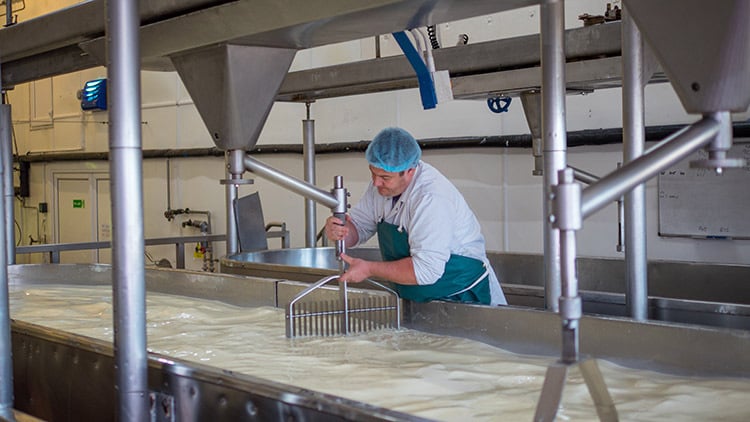
Between the farm and the table is a critical step: transformation.
Cheese processing turns a perishable product into a high-value, versatile food—extending shelf life, expanding market reach, and creating new opportunities for growth.
Processing facilities serve as economic anchors in their regions—creating skilled jobs, driving infrastructure investment, and supporting consistent demand for milk from nearby farms.
This stage of the supply chain is where innovation accelerates—developing new products, improving efficiency, and helping U.S. dairy remain competitive at home and abroad.
Cheese in the American Diet
The 2025-2030 Dietary Guidelines Advisory Committee report found that 88% of Americans over the age of 1 are under-consuming dairy. Cheese can be a great option for adding a serving of dairy to a healthy eating pattern. Cheese is a flexible way to get a serving of nutrient-dense dairy: it can be a snack on its own or as part of an entrée or meal.
Cheese is an important source of high-quality protein. When cheese is visibly served with other nutrient-dense foods, like fruits, vegetables and whole grains, the consumption of those other healthy options is also increased.
Cheese is a nutrient-dense food, providing a good source of protein, calcium and phosphorous. Its contributions to the diets of Americans include: 27% of the calcium, 13% of the phosphorus, 11% of vitamin A and 8% of the protein consumed by Americans. For children, cheese is an even more important source of nutrition: cheese is the number two source of calcium for children 2-11 and the number 1 source of calcium for children 12-18. Cheese is also in the top five sources of vitamin D for children 2-18.
In addition to providing essential nutrients and contributing toward dairy intake, many cheeses are naturally low in lactose. This means that cheese can be an important source of calcium for those with lactose intolerance. Natural cheeses such as Cheddar, Colby, Monterey Jack, Mozzarella and Swiss contain minimal amounts of lactose, because most of the lactose is removed when the curds are separated from the whey in the cheese making process.
(Source: IDFA)
Built on Essential Nutrients
Provides high-quality protein, calcium, and essential nutrients
Delivering Daily Value
Contributes significantly to daily intake of calcium, phosphorus, and vitamin A
Supports Healthier Choices
Trade and Supply Chain
The Upper Midwest is a powerhouse for cheese production. Ensuring opportunities for dairy through existing, expanding or emerging markets is essential to healthy growth. New and expanded markets through new trade agreements, renegotiated trade agreements and enforcement of existing agreements provide opportunities for market access.
Rural Workforce for Rural Prosperity
The dairy industry faces ongoing labor shortages making workforce availability and reliability a critical policy priority. Improving access to year-round agricultural labor, streamlining visa programs, and modernizing workforce solutions are essential to sustaining the rural communities that depend on a strong dairy sector.
Farm Bill Advocacy
Passage of the 2026 farm bill will be an essential opportunity to finalize legislation that will provide farmers with certainty and stability amid ongoing market uncertainty. Ensuring support programs, risk management tools and conservation programs are updated and funded is critical for farmers.
Conservation and Environmental Sustainability
Edge stands with our farmers in their commitment to seek effective and financially viable ways to protect and improve water quality and reduce greenhouse gas emissions. We believe environmentally focused policies affecting agriculture should be guided by farmers, grounded in science, driven by the marketplace and sufficiently flexible to allow for innovation at the farm level.
Support the Future of
Dairy’s Future Is Worth the Conversation
Connect with our team to explore policy solutions that support dairy farmers, strengthen rural communities, and sustain America’s dairy economy.
Karen Gefvert
Chief policy officer
(608) 617-2772